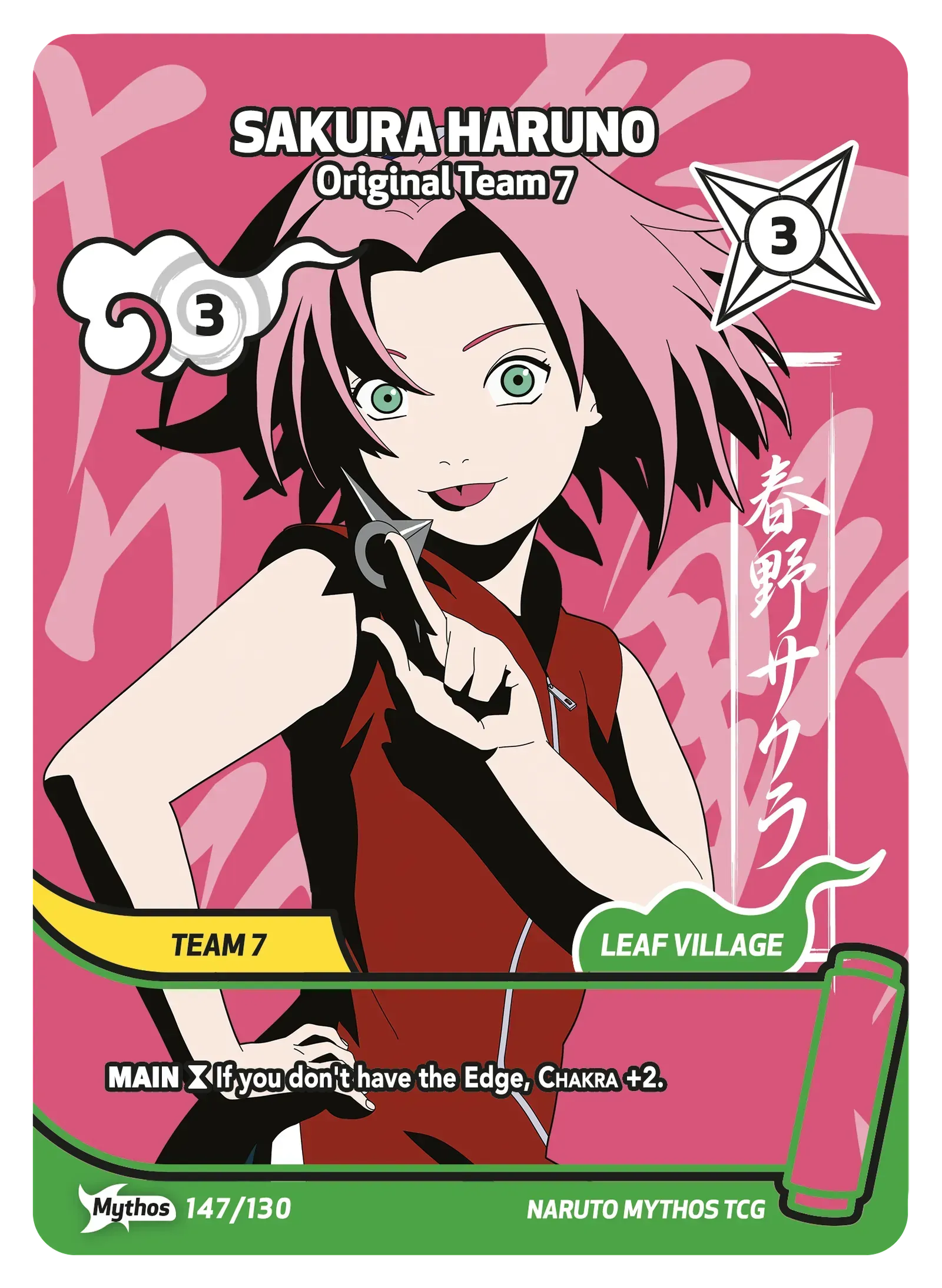
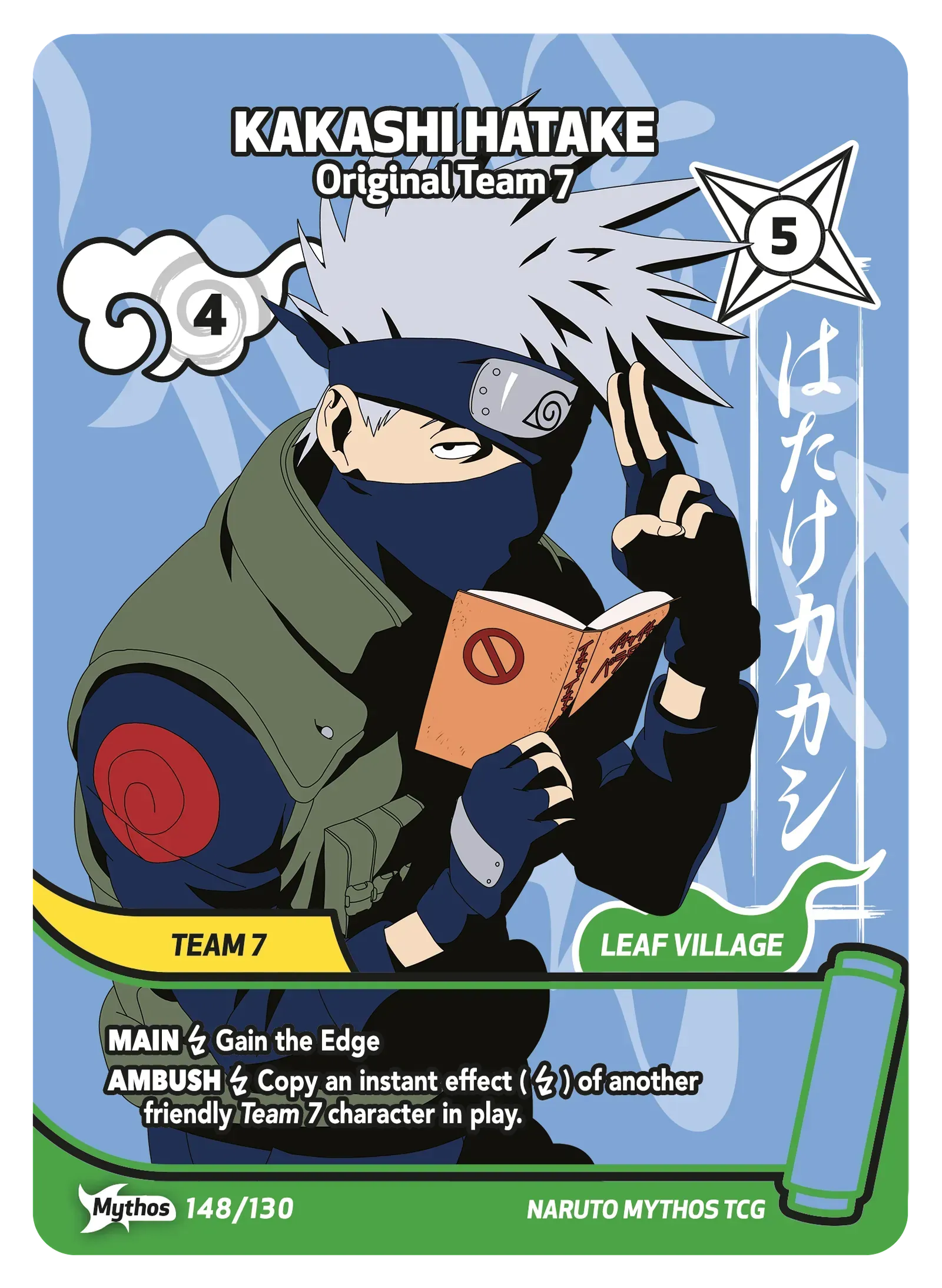
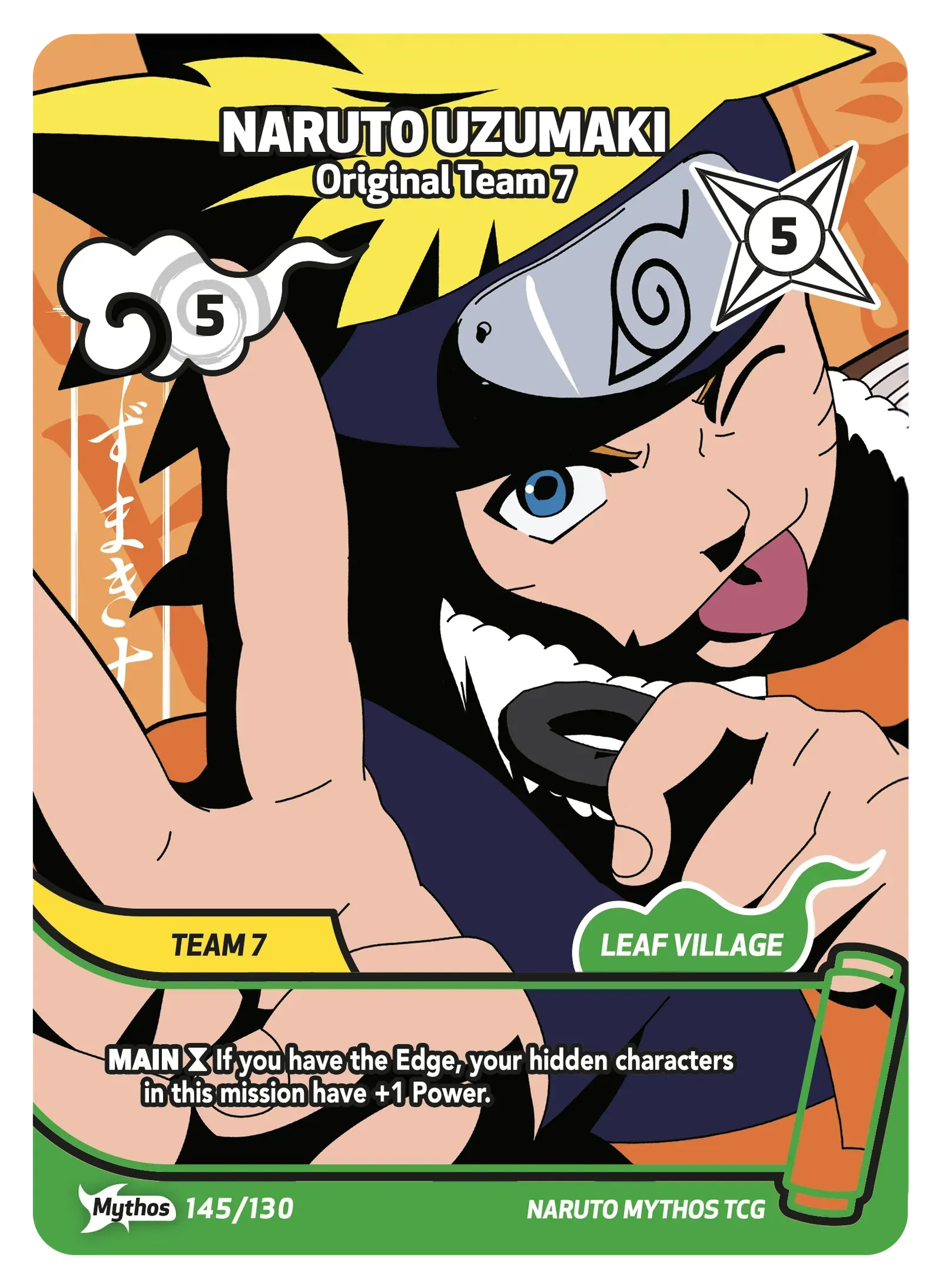
Common
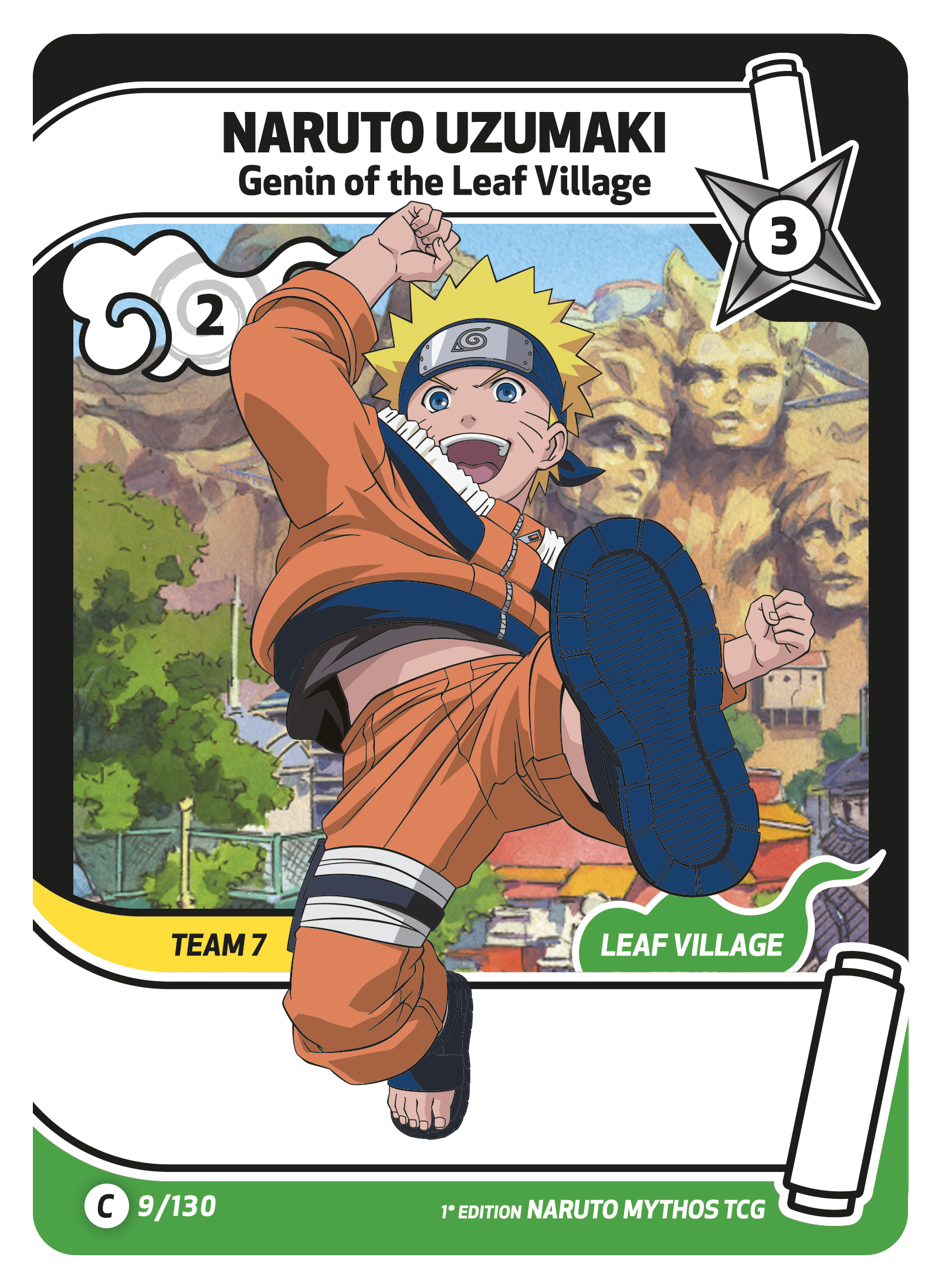
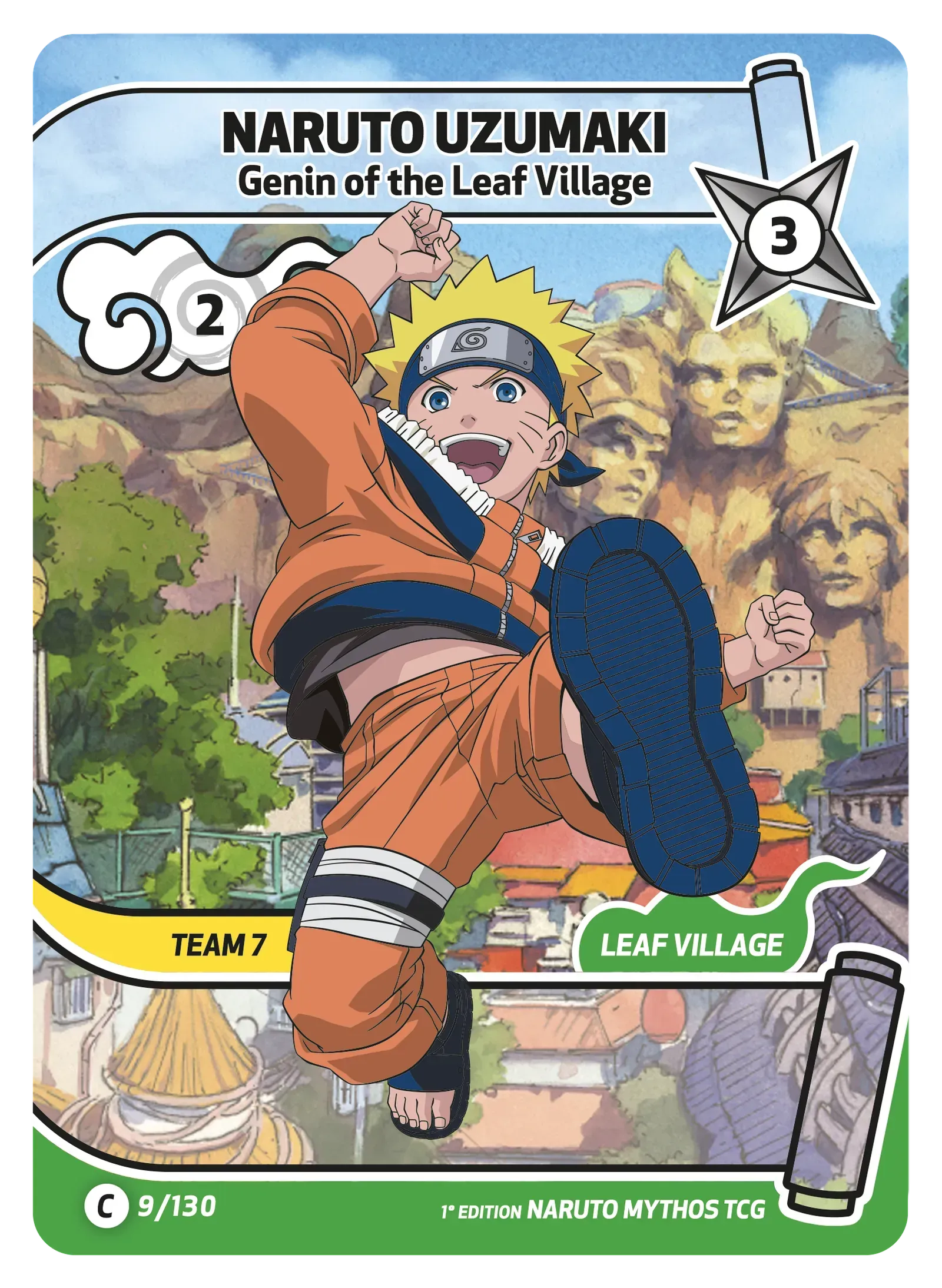
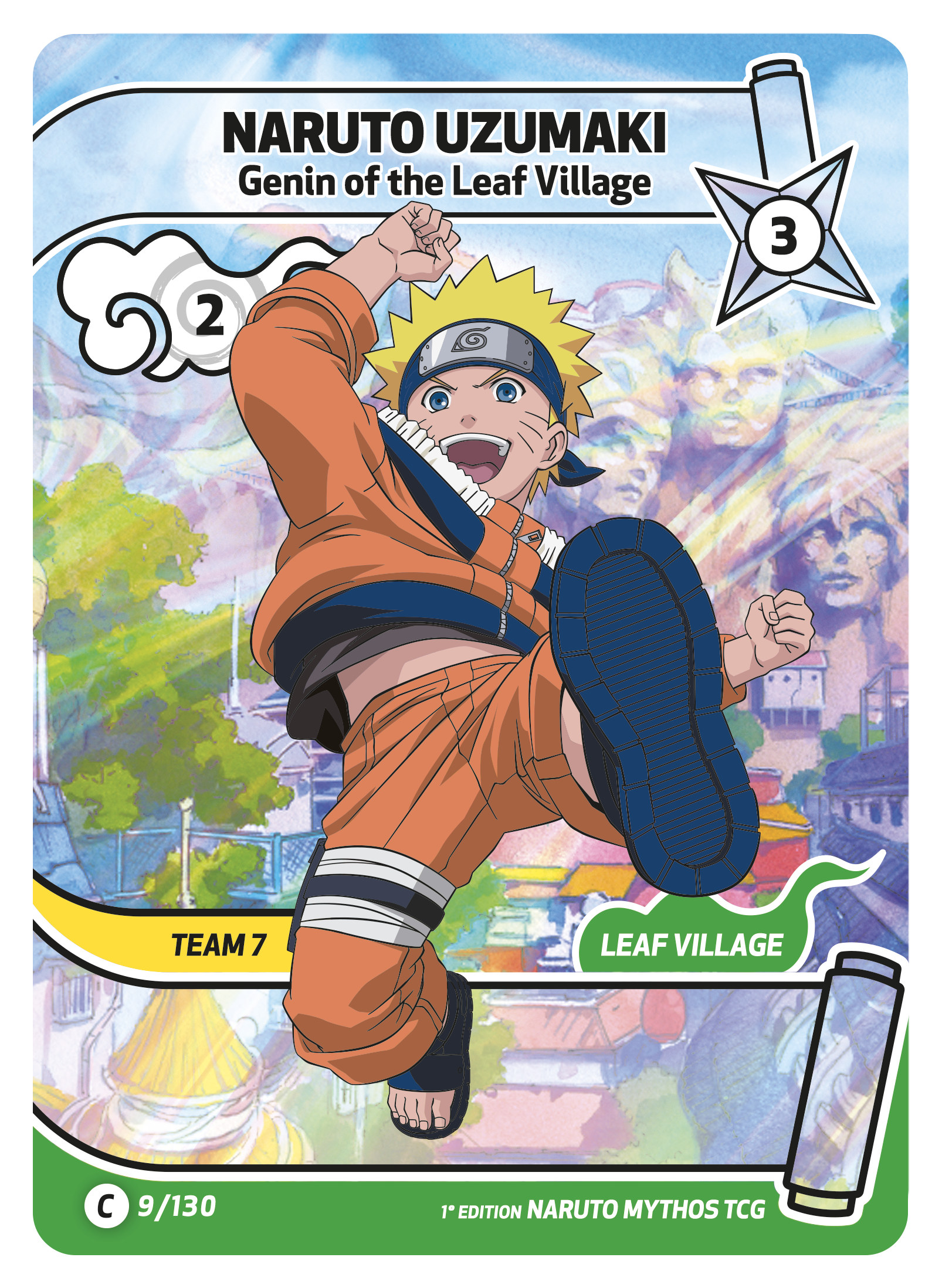
Common cards form the backbone of every deck — most frequently found, printed in three variants: standard, Full Art (full holographic frame), and Holo (artwork-only holo). Mechanically interchangeable.
Learn all card rarity levels in Naruto Mythos TCG — from Common to 22-karat-gold Legendary.
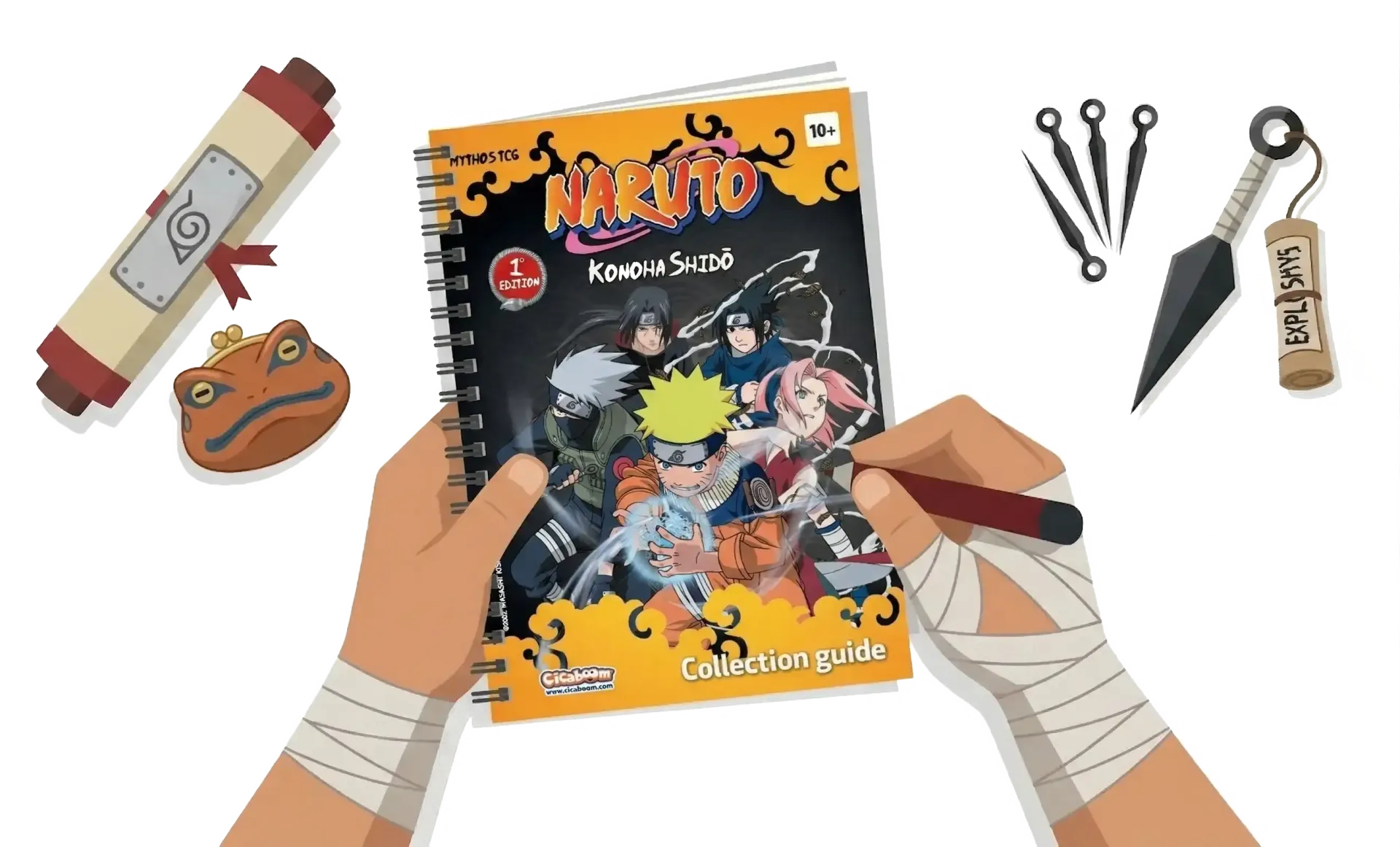
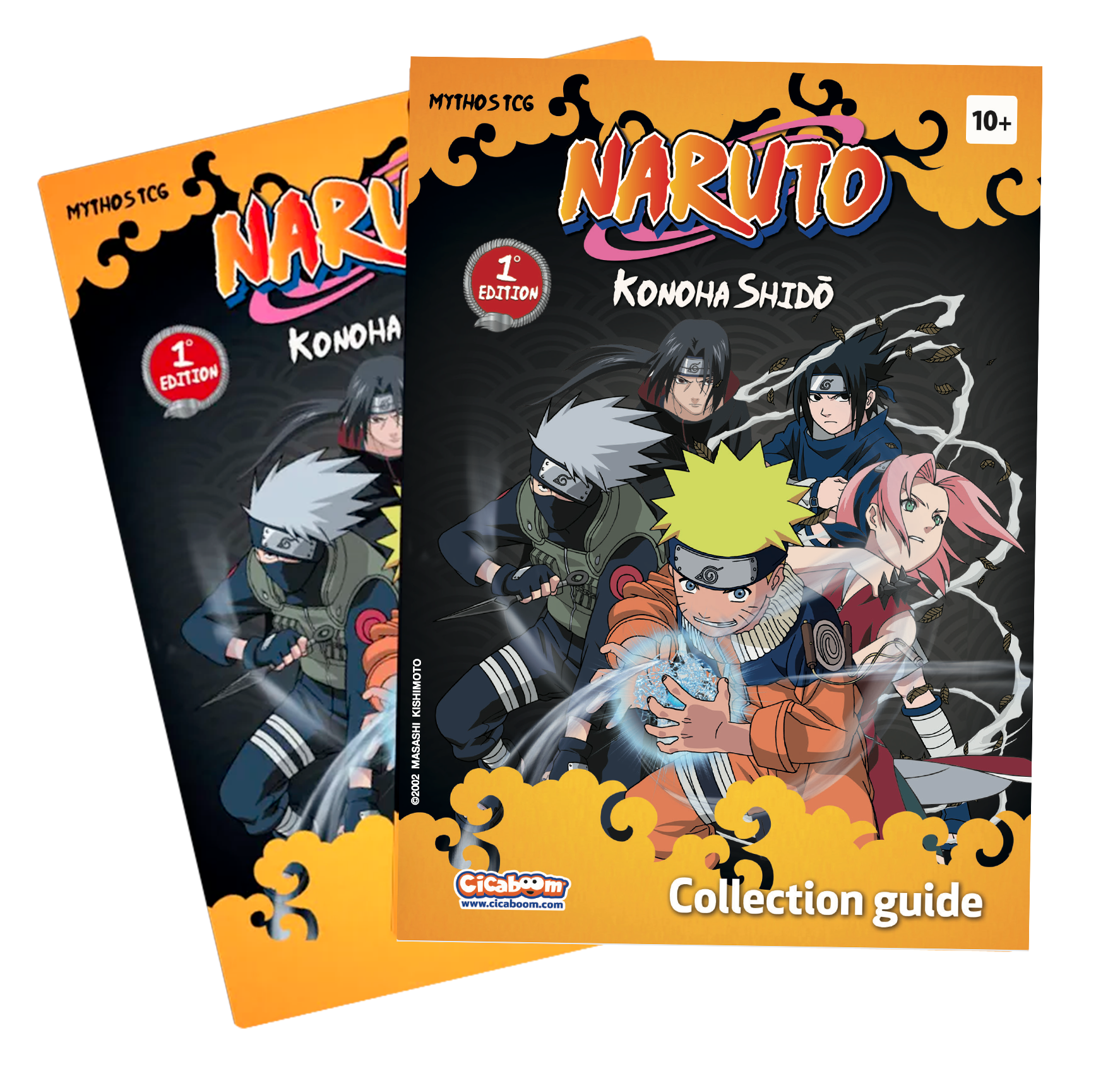
Full collection guide in PDF — published by the game's publisher. Contains a complete list of all cards in the set, their numbers, rarities, and faction groups.
PDFs in English, official source: narutotcgmythos.com.
Every card in Naruto Mythos TCG has a rarity that determines how often it appears in boosters. Below is a short breakdown of each level with examples.
Common cards form the backbone of every deck — most frequently found, printed in three variants: standard, Full Art (full holographic frame), and Holo (artwork-only holo). Mechanically interchangeable.

Uncommon cards appear less frequently than Common, also in three print variants. They often serve as key support pieces — roughly one Uncommon per booster.
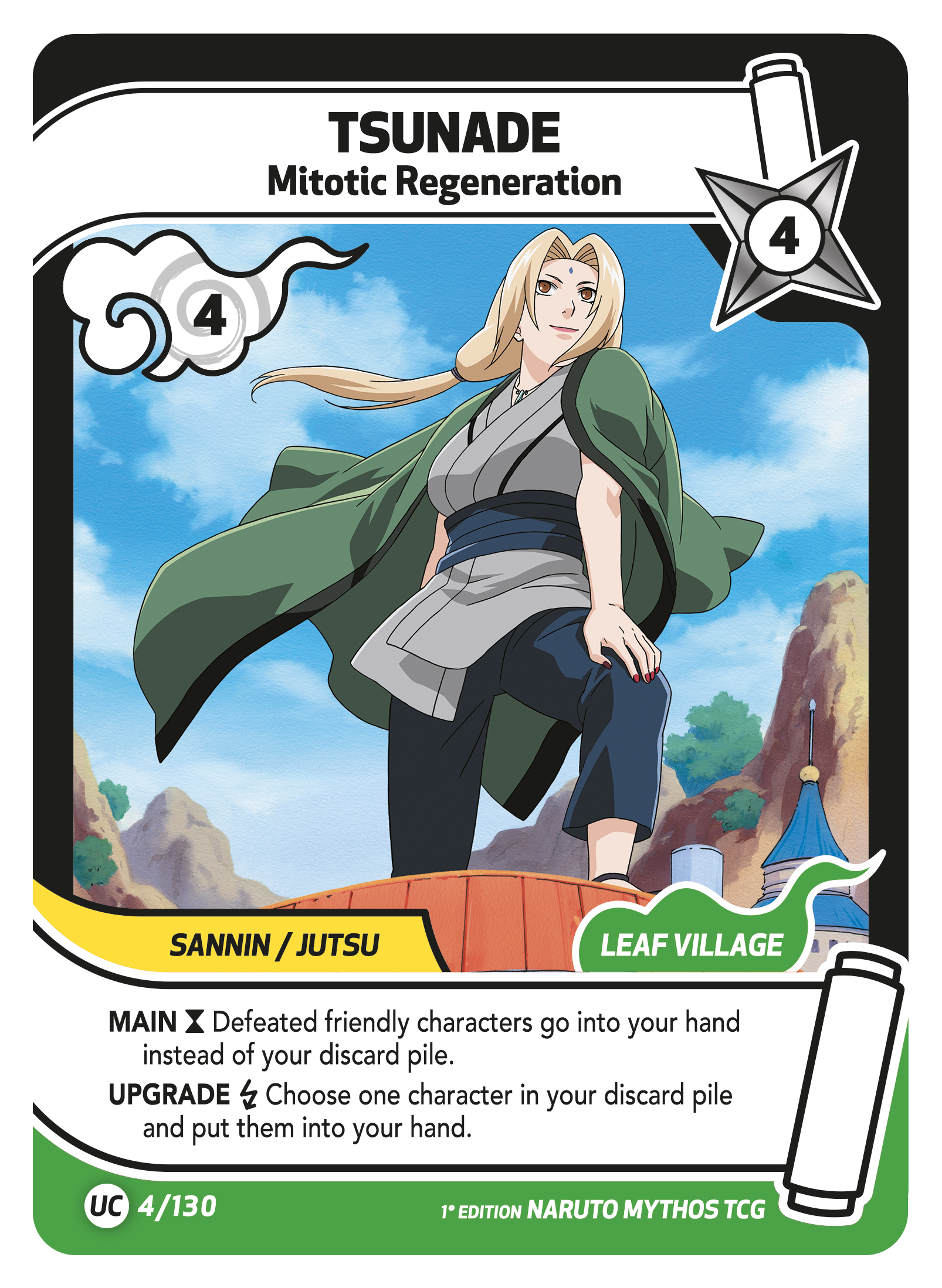
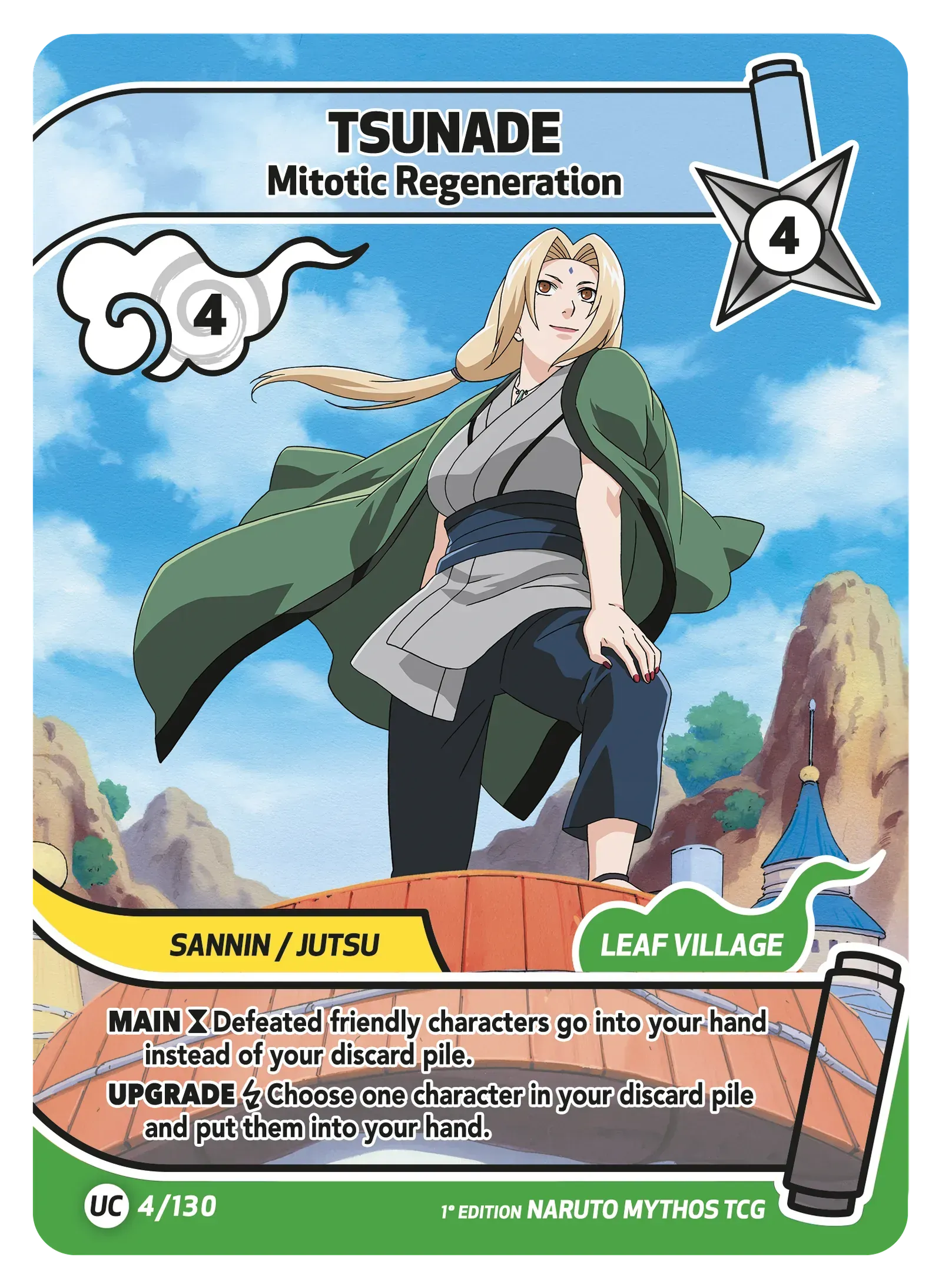
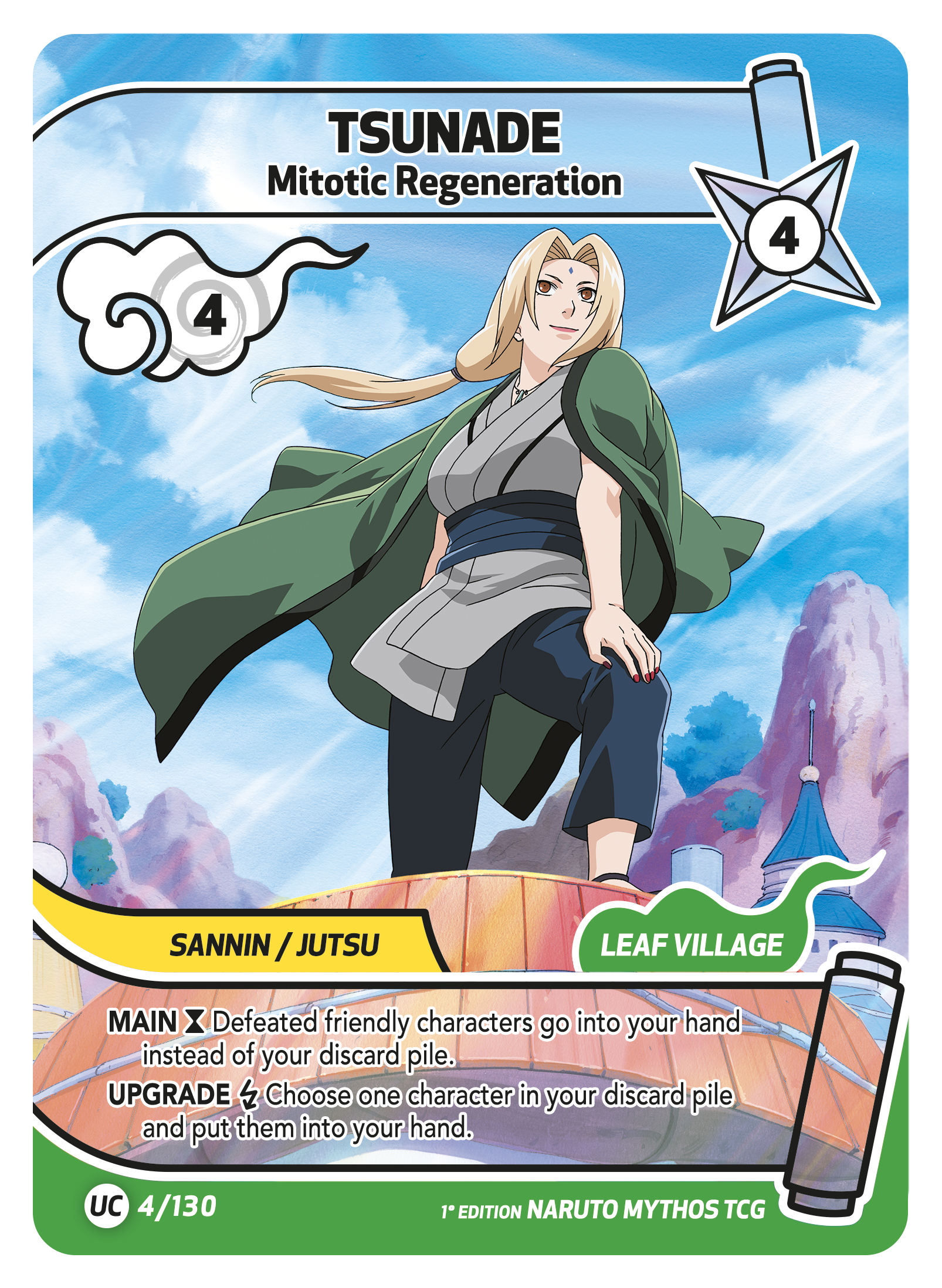

Rare cards are strong performers — characters or techniques with significant impact on the game. Every booster guarantees at least one Rare, always with full-card holographic finish.
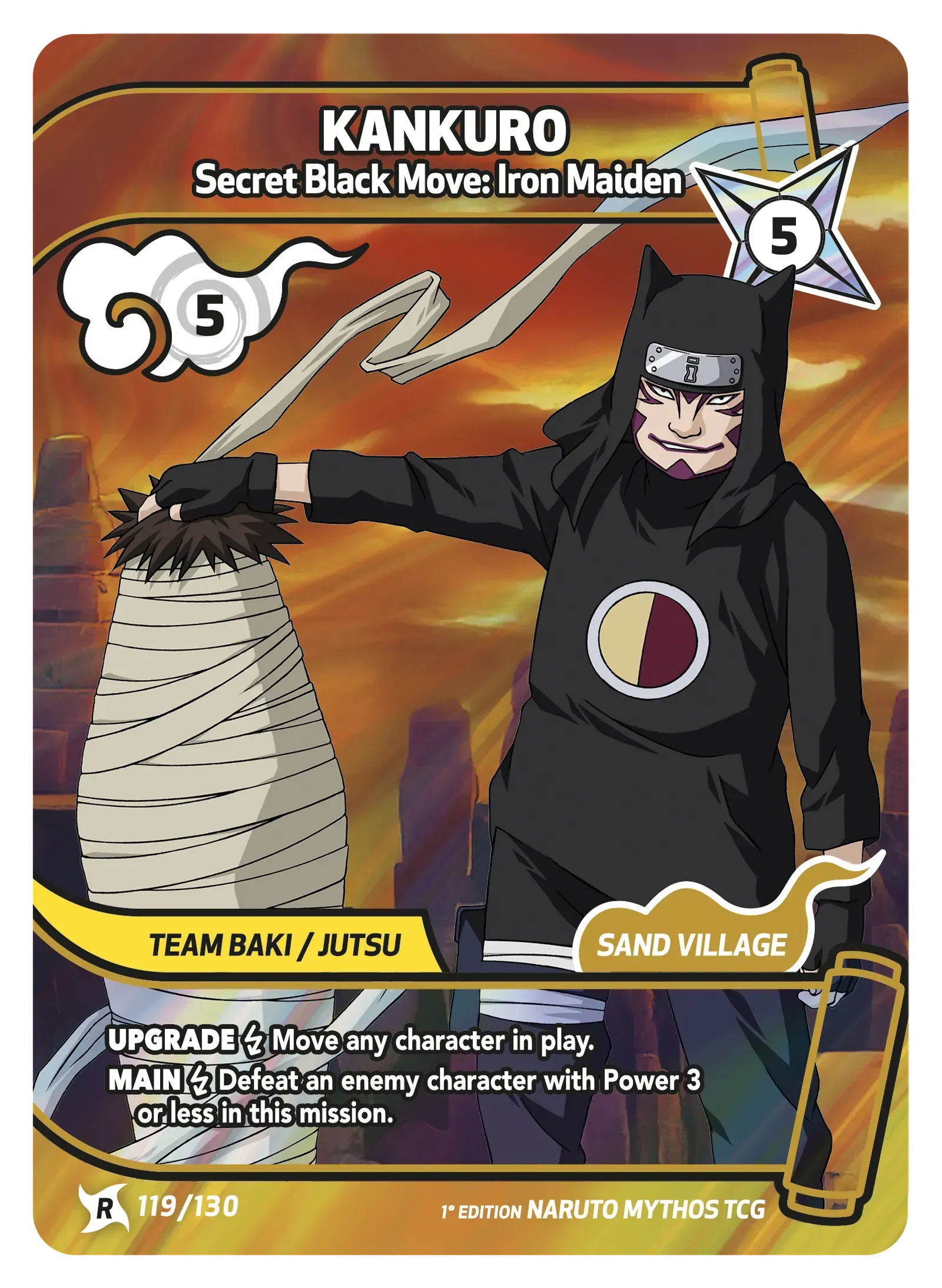
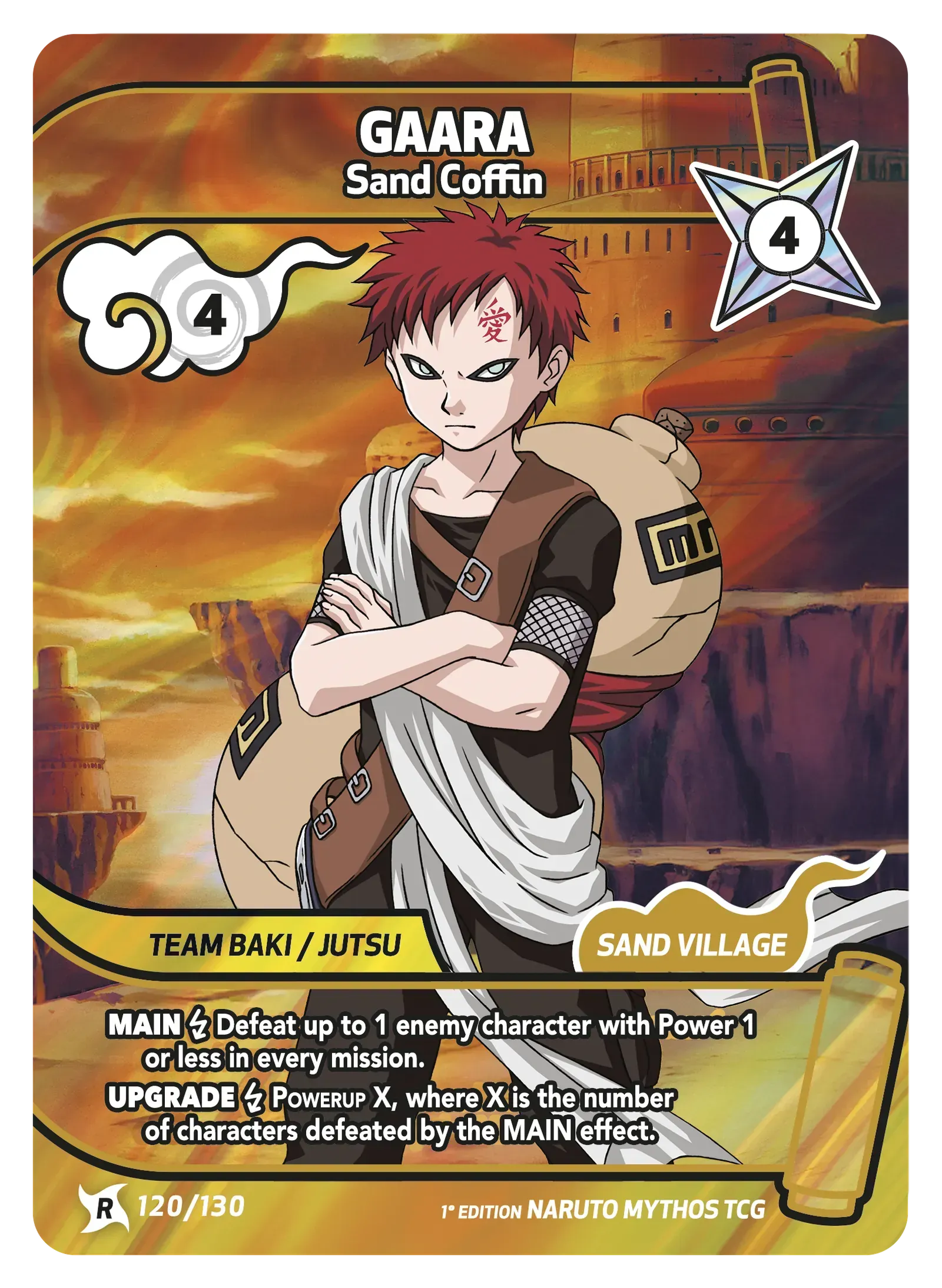
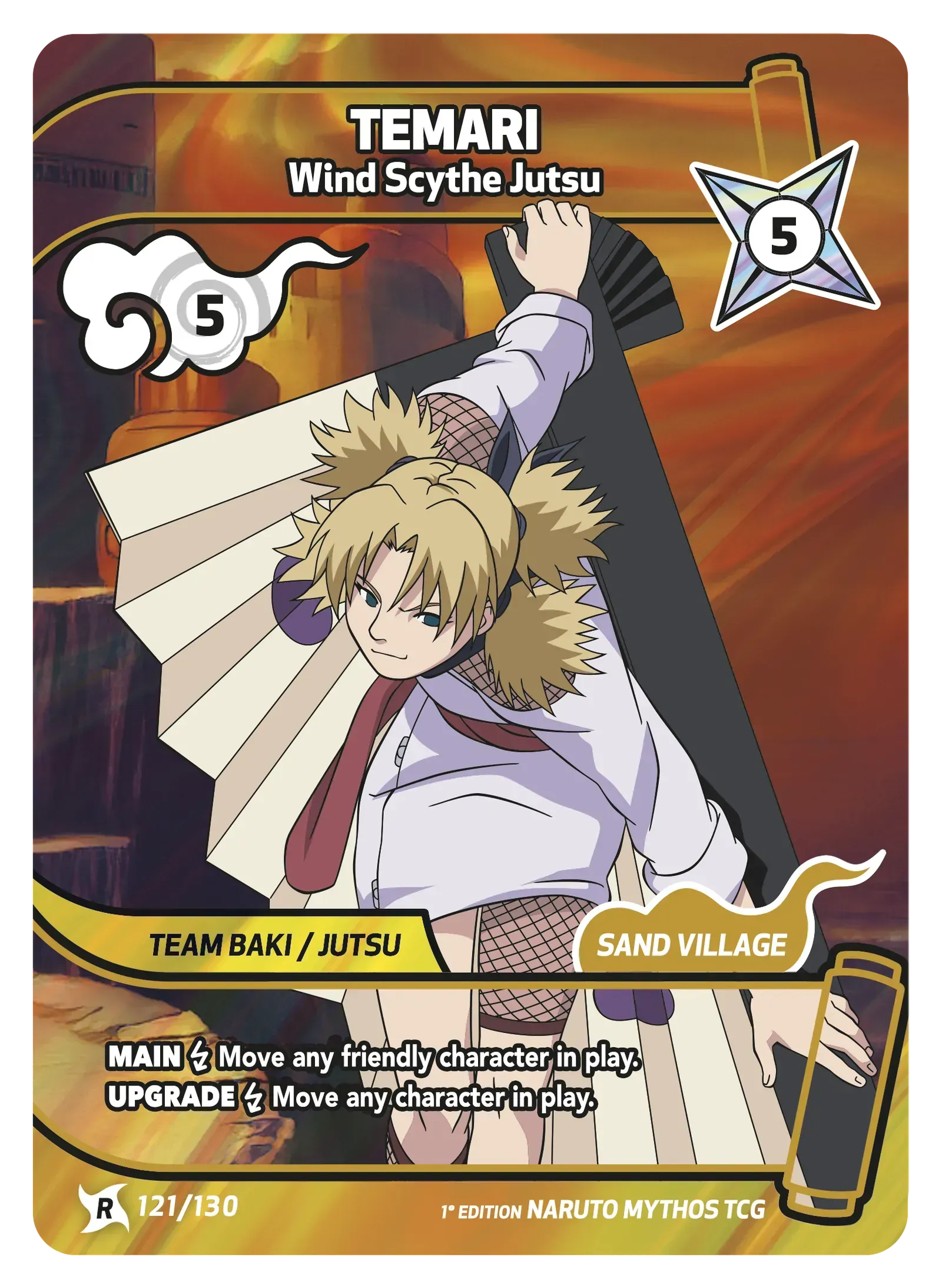

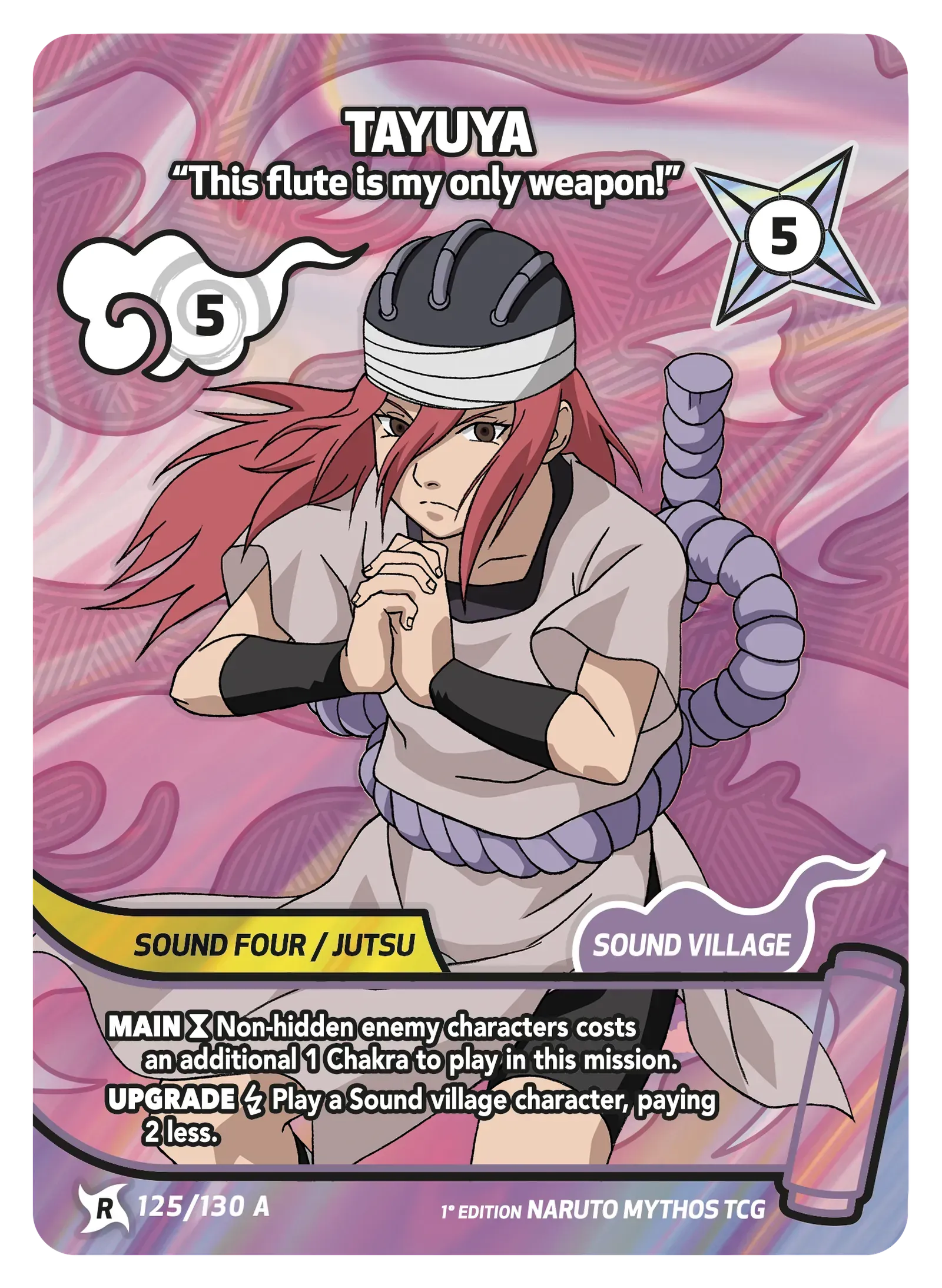
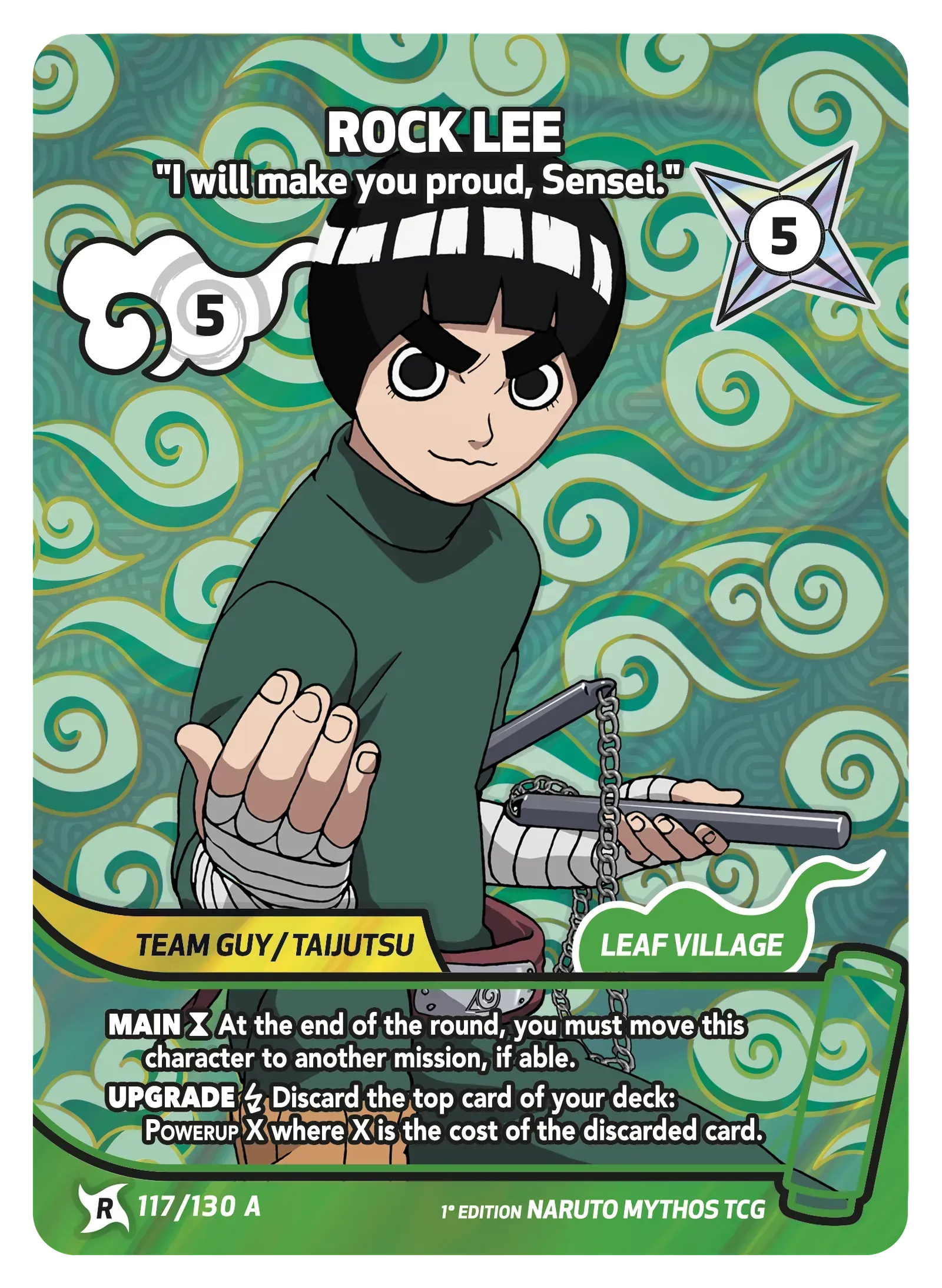
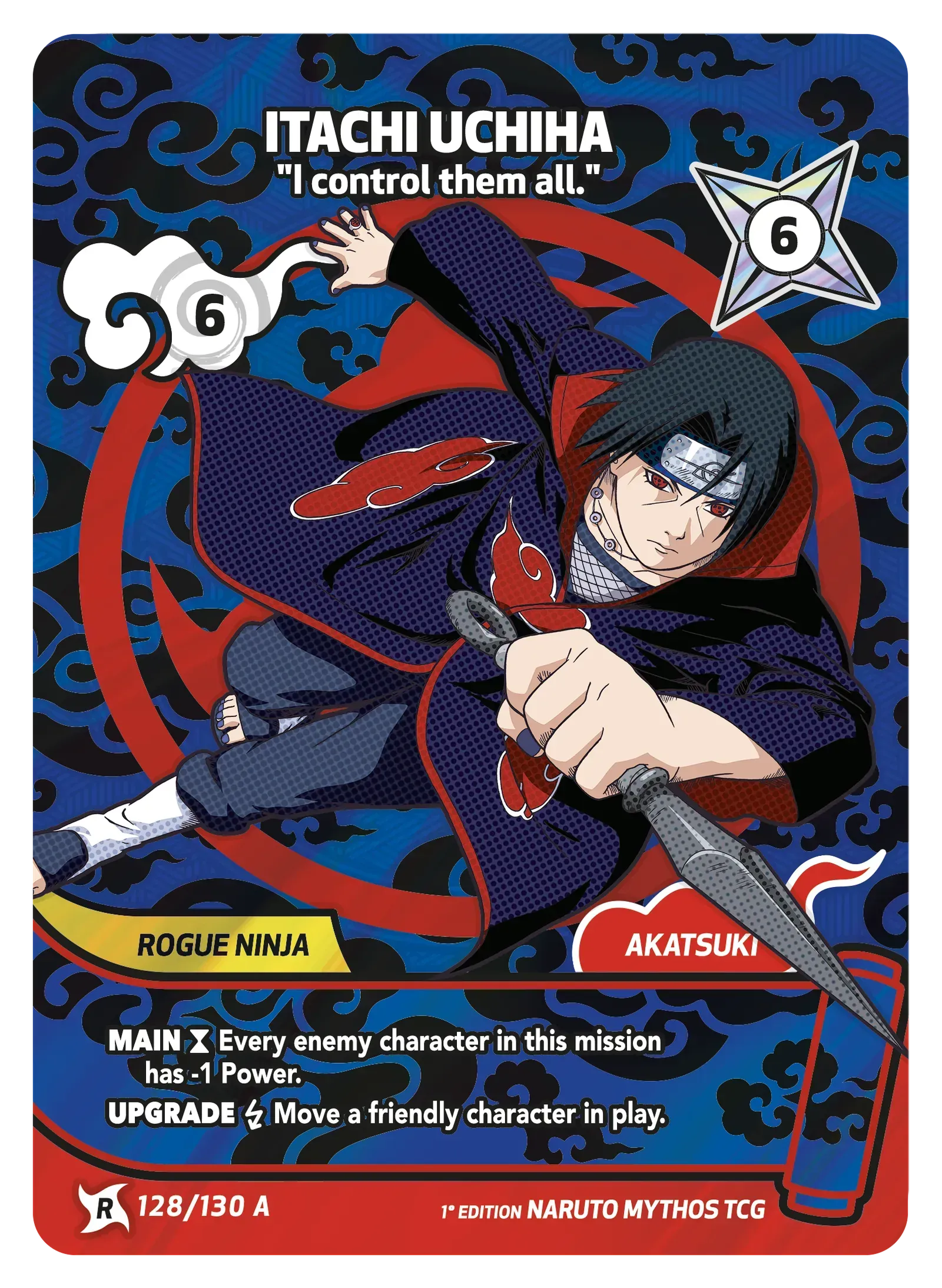
Alternative versions of Rare cards with unique artwork — same gameplay effect, different image. Often featuring full-character portraits. Rarer than regular Rares.

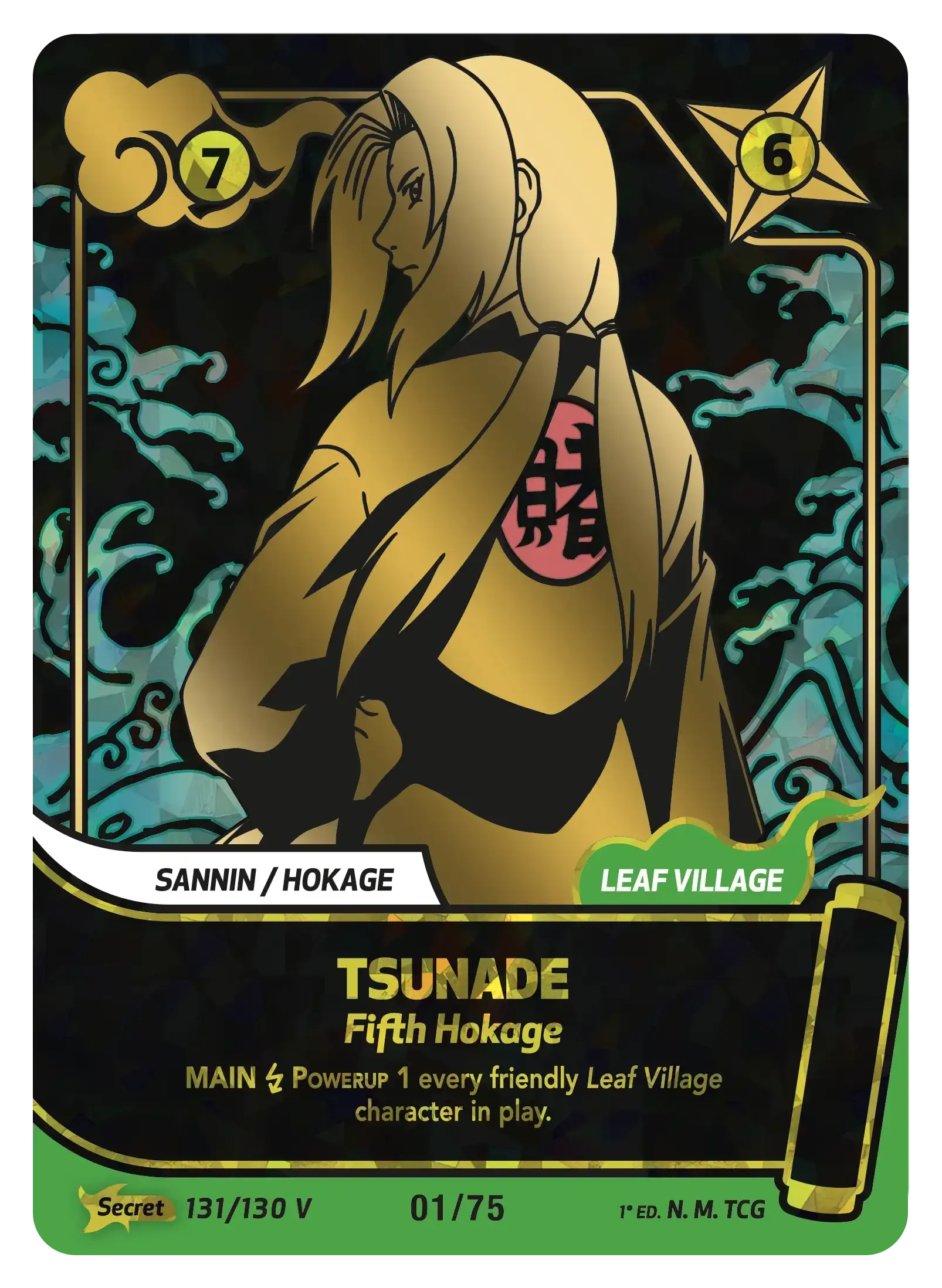
Top rarity level from the base set — gold foil across the whole card, premium light effect. Individually numbered (e.g. 075/750). Highly sought after by collectors.
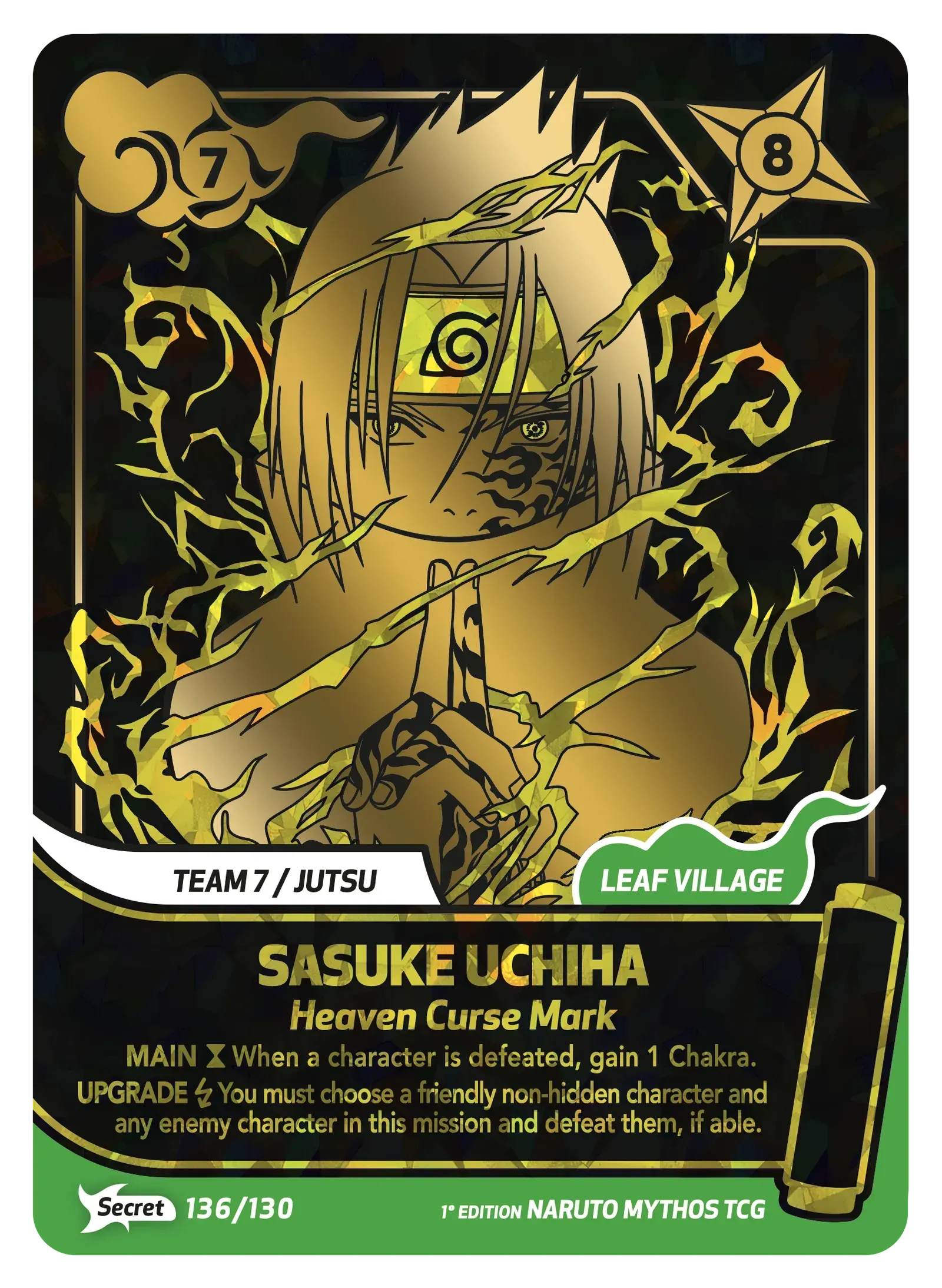
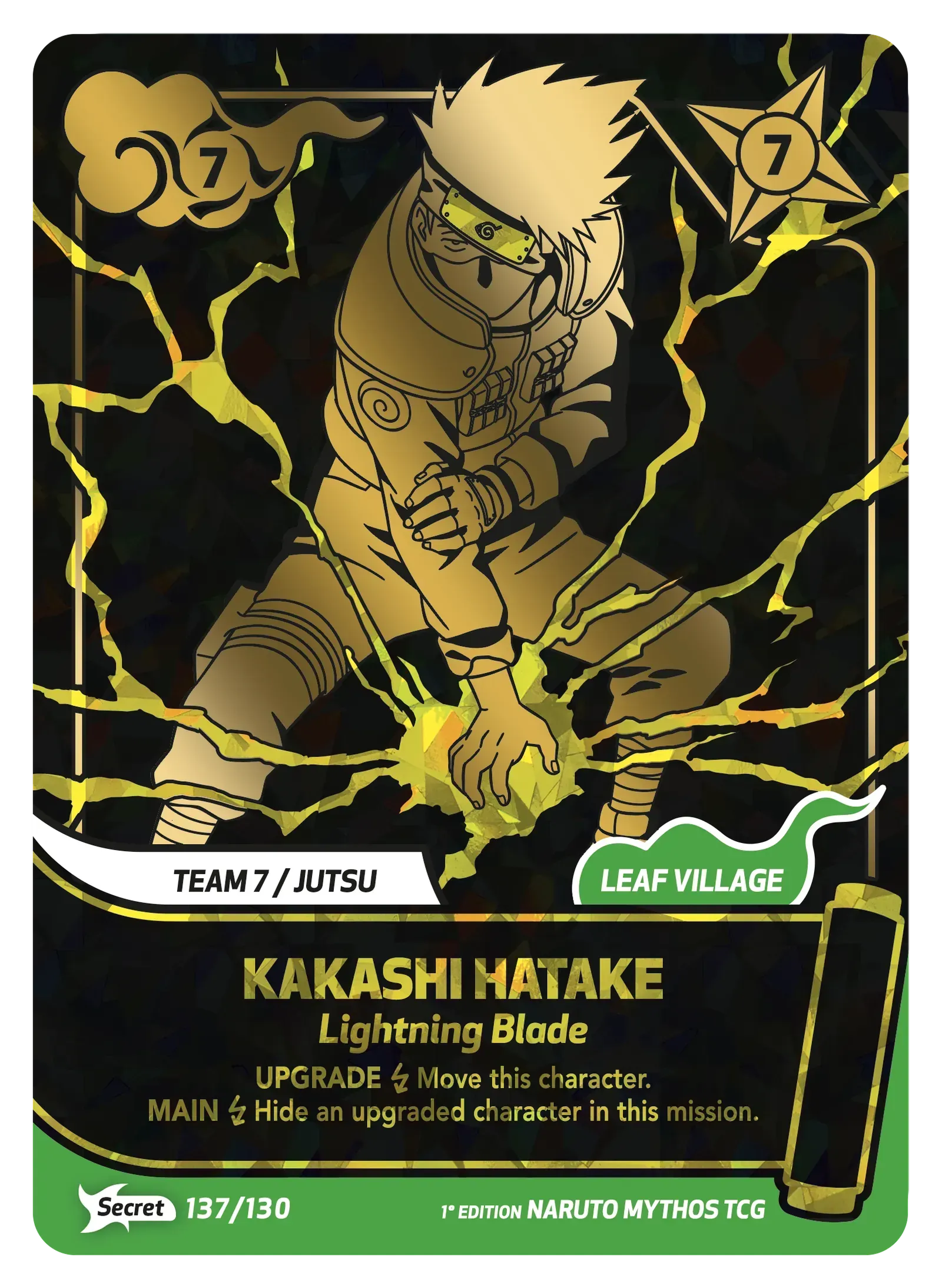
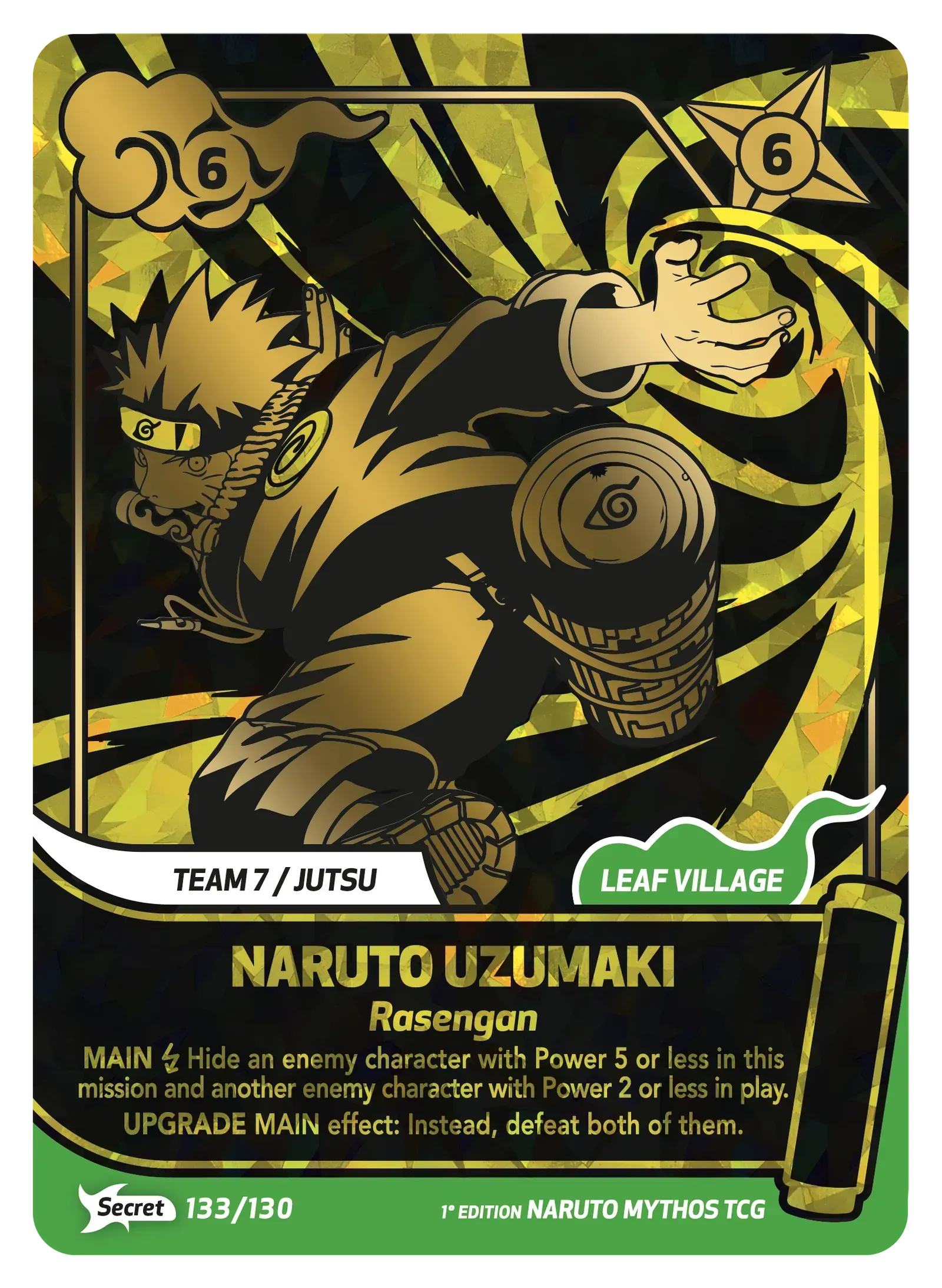
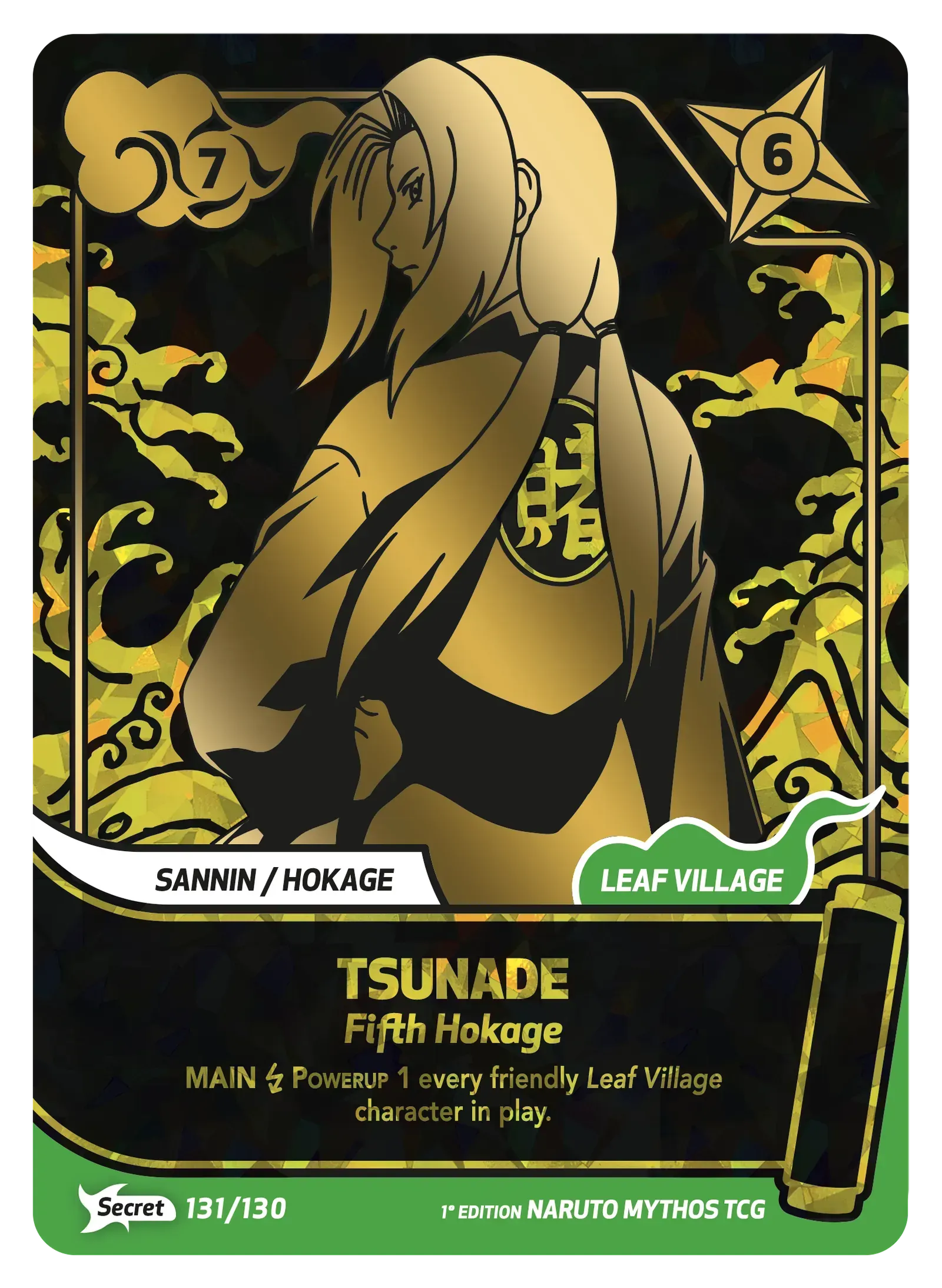
Limited Secret Rare edition with alternative artwork and its own numbering. Extremely rare — among the hardest cards to pull in the entire set.
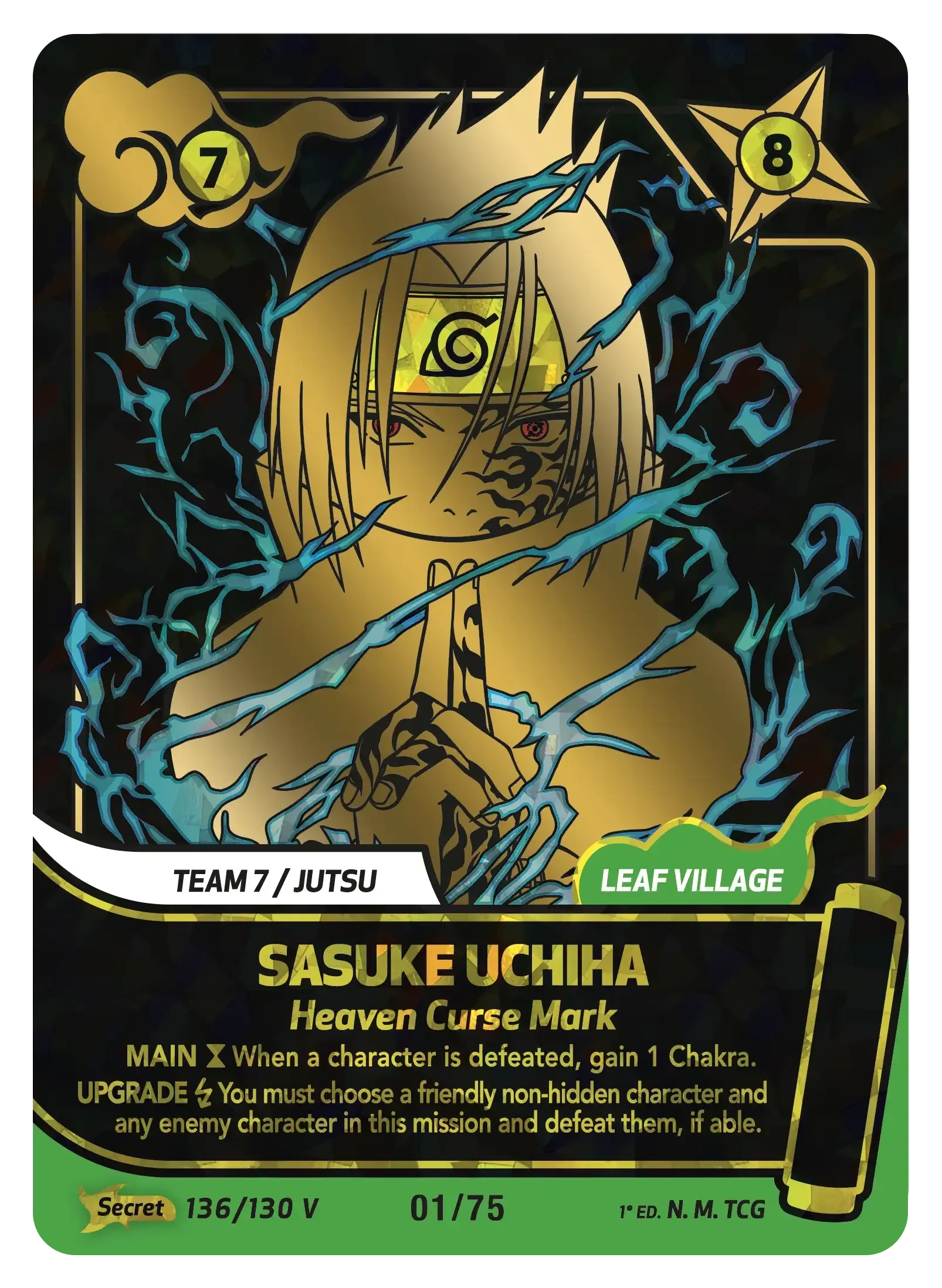
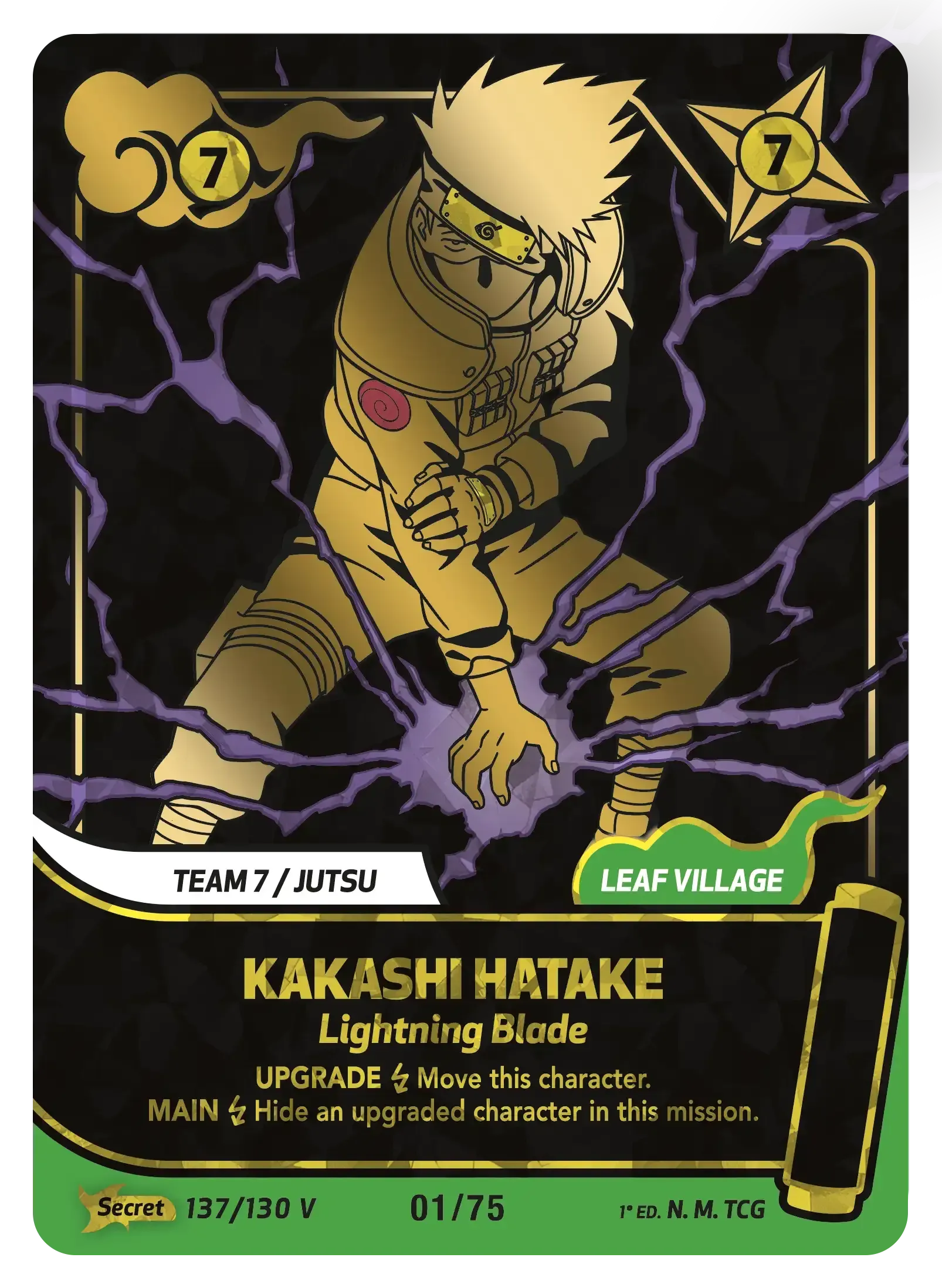
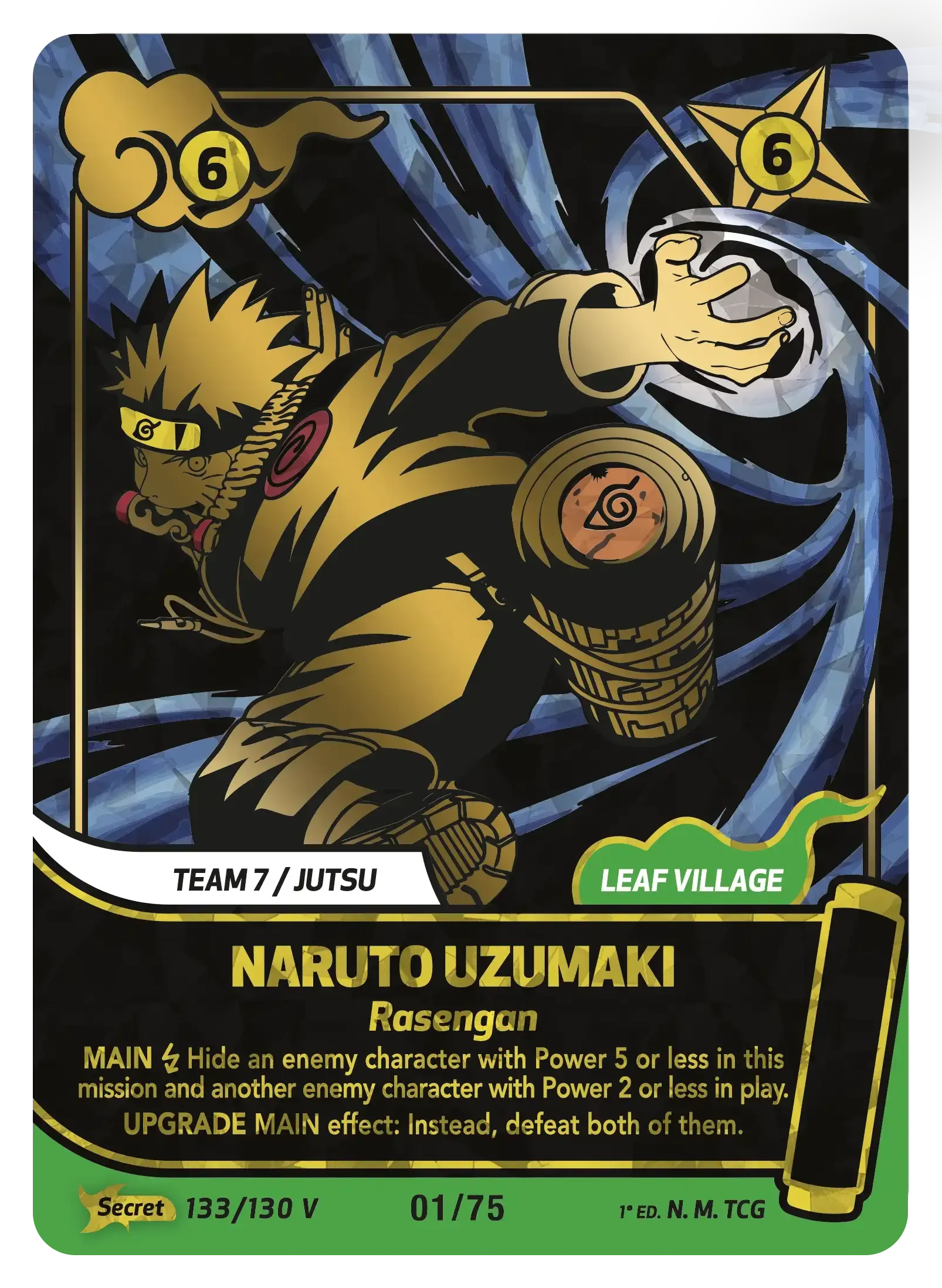

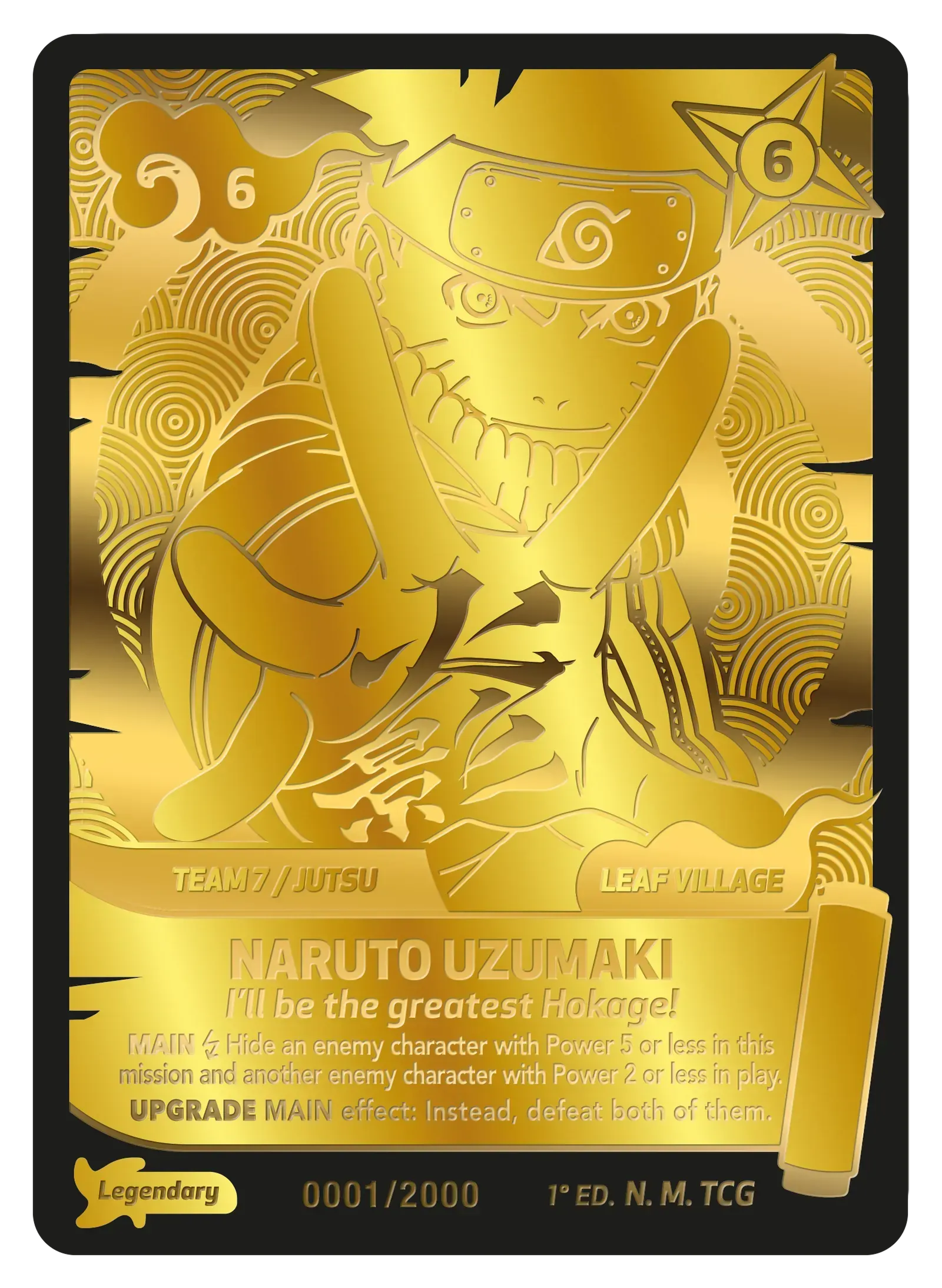
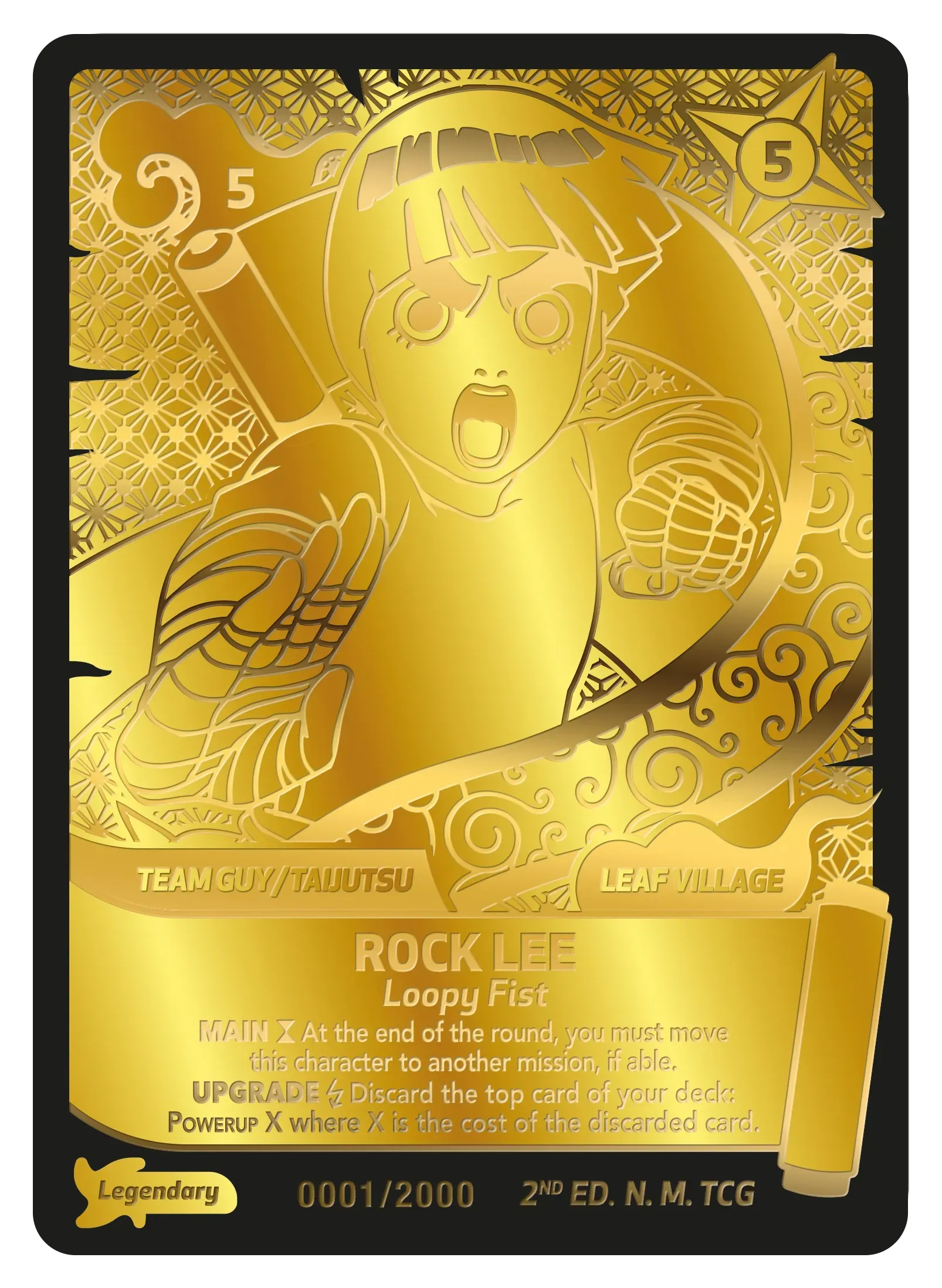
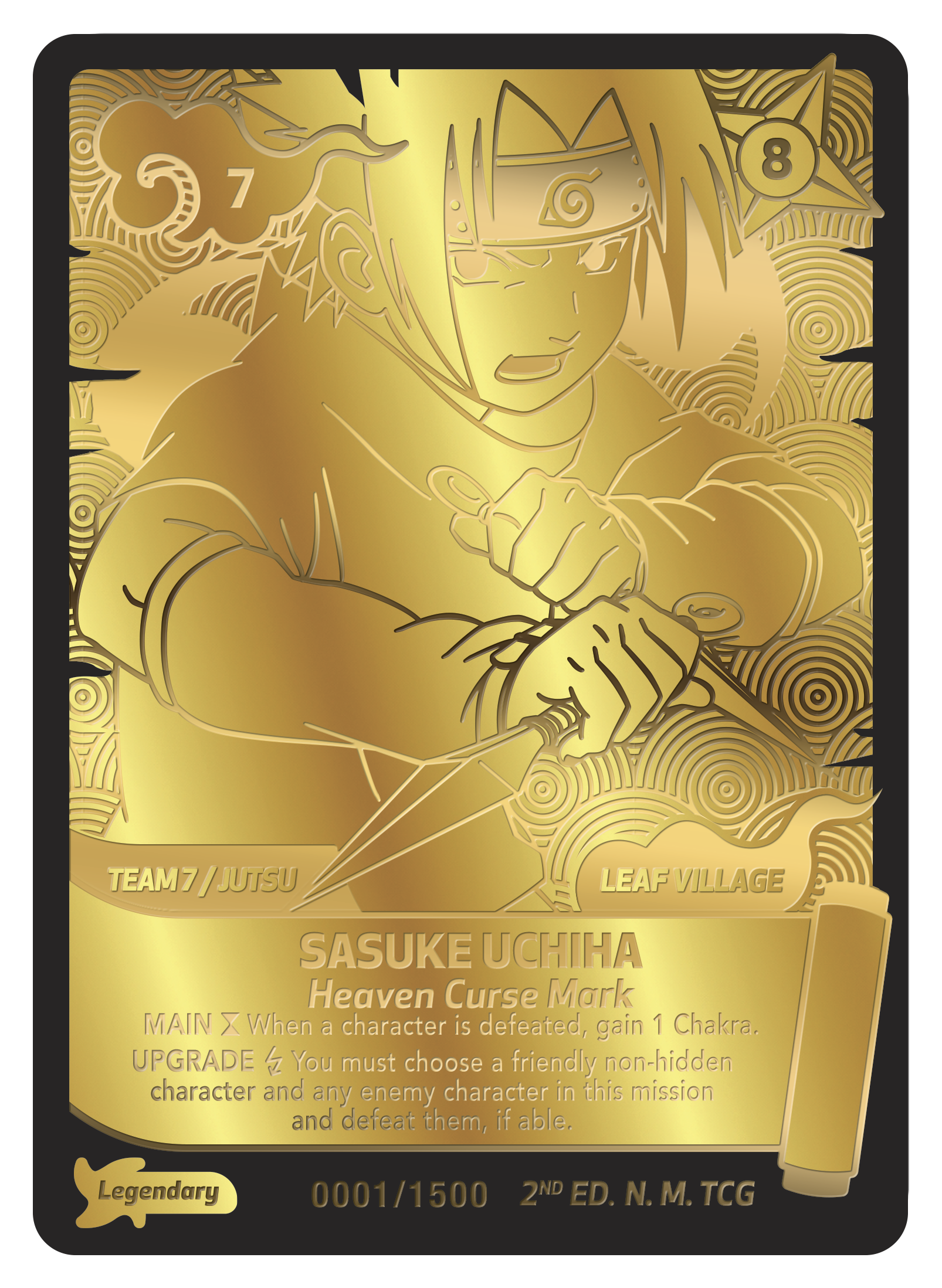
An exceptional rarity. Made with real 22-karat gold (Giusto Manetti Battiloro), with fine micro-engraving. Pull rate: 1 per 800 boosters. Set 1 has 1 Legendary; Set 1 2nd Edition introduces two (Rock Lee + Sasuke).

Special cards distributed exclusively at events, tournaments, and promotional campaigns. Not available in boosters — obtainable only through active Organized Play community participation.